
✓ Certified Systems Implementation Expert
ERP Implementation Services for Growing Businesses.
When growing businesses outgrow their systems, the result is often fragmented data, manual workarounds, and limited visibility across departments. Certum Solutions helps businesses across North Carolina & nationwide across the U.S. evaluate, select, and implement ERP systems that align operations, accounting, inventory, and leadership reporting; creating a single source of truth that supports confident decision-making and long-term growth. We don’t just implement ERP software. We configure systems that work the way your business actually runs.
Multi Award
Winner Across Systems for Implementation
15+
Years implementing ERP systems
Integration
Experts for ERP & system integration needs
500+
Businesses served across 15+ industries
✔️ Woman-Owned & BBB Accredited
✔️ Accountants Who Speak Tech
✔️ Platform-Agnostic Advisors
✔️ Local Roots, National Reach
ERP Implementation for Mid-Market Businesses ($1M–$30M)
Most ERP conversations in the market happen at two extremes: basic accounting software that outgrows itself quickly, and enterprise platforms that cost hundreds of thousands of dollars to implement and require dedicated IT teams to maintain. Certum Solutions works in the space between those two extremes — with businesses that have moved past QuickBooks Online or basic tools but are not yet at the scale where Dynamics 365, SAP, or Oracle makes operational or financial sense. Our ERP implementations are designed for companies generating $1M to $30M in revenue, typically in manufacturing, distribution, construction, e-commerce, or professional services, where the complexity of operations has outpaced the capability of the existing system. If you are managing inventory across multiple locations, running multiple entities, selling across multiple channels, or building and assembling products — and your accounting does not reflect what is actually happening in operations — that is exactly the problem our ERP practice is built to solve.



Services
How We Engage — ERP Implementation Services
Every engagement starts with a paid discovery. We document your current systems, workflows, data quality, integration requirements, and business goals before any implementation work begins. From there, we produce a written Statement of Work with a fixed scope, defined deliverables, and a project timeline. You know exactly what you are buying before any work starts.
Discovery & Scoping
Paid Discovery: Before implementation begins, we spend time conducting a structured evaluation of your business: current systems, data quality, workflow gaps, integration requirements, and operational goals. This produces a written Discovery Report (a scoped project proposal with a Gantt chart, deliverables, and itemized pricing) so there are no surprises when implementation starts.
Includes requirements gathering, file review, system assessment, migration feasibility, written project proposal, and implementation timeline.
Discovery Report: A presentation-ready document delivered after paid discovery. Includes key findings, recommended improvements, identified risks, a Gantt chart of the proposed implementation timeline, and a detailed project proposal for your review and approval. Required before any implementation SOW is signed.
ERP Setup & Migration
Full ERP / Software Implementation: End-to-end deployment of your chosen platform. We manage every phase from kickoff through go-live: requirements validation, software configuration, data migration, integration support, user acceptance testing, team training, and post-launch support.
Implementation with Bookkeeping Transition: For clients moving to a new platform mid-year, or transitioning from an internal bookkeeper to Certum Solution's accounting team at go-live. Combines platform setup with a structured financial handoff — chart of accounts rebuild, historical data review, and a clean accounting baseline at launch.
Data Migration: We extract, map, clean, and import your chart of accounts, vendor and customer records, open balances, historical transactions, and inventory data. We preserve historical reporting so year-over-year comparisons remain intact after cutover.
Consultation & Training
Consultation Time Blocks (5, 10, or 15 hours) Flexible time for targeted work; system configuration questions, workflow design, report setup, integration troubleshooting, chart of accounts review, or training your internal team on the platform you just deployed. Purchased as a block and drawn down as needed.
Deployment Package (20 hours) A structured block for larger consulting engagements requiring sustained attention: full workflow design sessions, admin training across departments, integration buildout support, or post-go-live optimization work following a completed implementation.
Implementation Methodology Coaching One-on-one coaching for businesses running a guided DIY implementation or managing an internal IT team through deployment. Covering data formatting & preparation, system configuration guidance, train-the-trainer sessions, go-live planning, and post-launch Q&A.
Ongoing Support
Cin7 Monthly Support: Dedicated monthly support for Cin7 inventory management — day-to-day questions, minor configuration updates, troubleshooting, and regular system check-ins. Includes up to 10 hours per month at a discounted rate; additional hours billed at standard rate. Available as a standalone engagement or as continuation after a Cin7 implementation.
Post-Implementation Accounting Most implementation clients transition into ongoing bookkeeping or accounting services with our team after go-live. We offer monthly bookkeeping across all transaction volume tiers, senior accountant oversight, AP and AR add-ons, payroll bookkeeping, and advisory services — so the firm that implemented your system can keep it accurate month to month without a handoff gap.
Post-Project Support Ongoing options for quick questions, guidance, and support.
Not Sure Which Engagement Fits?
Our discovery call is free. We'll spend 30–45 minutes understanding your current systems, operational pain points, and business goals. If it makes sense to move forward, we scope the work in writing and send a fixed proposal before any engagement begins.
Software Only
Just need the software — not a full implementation?
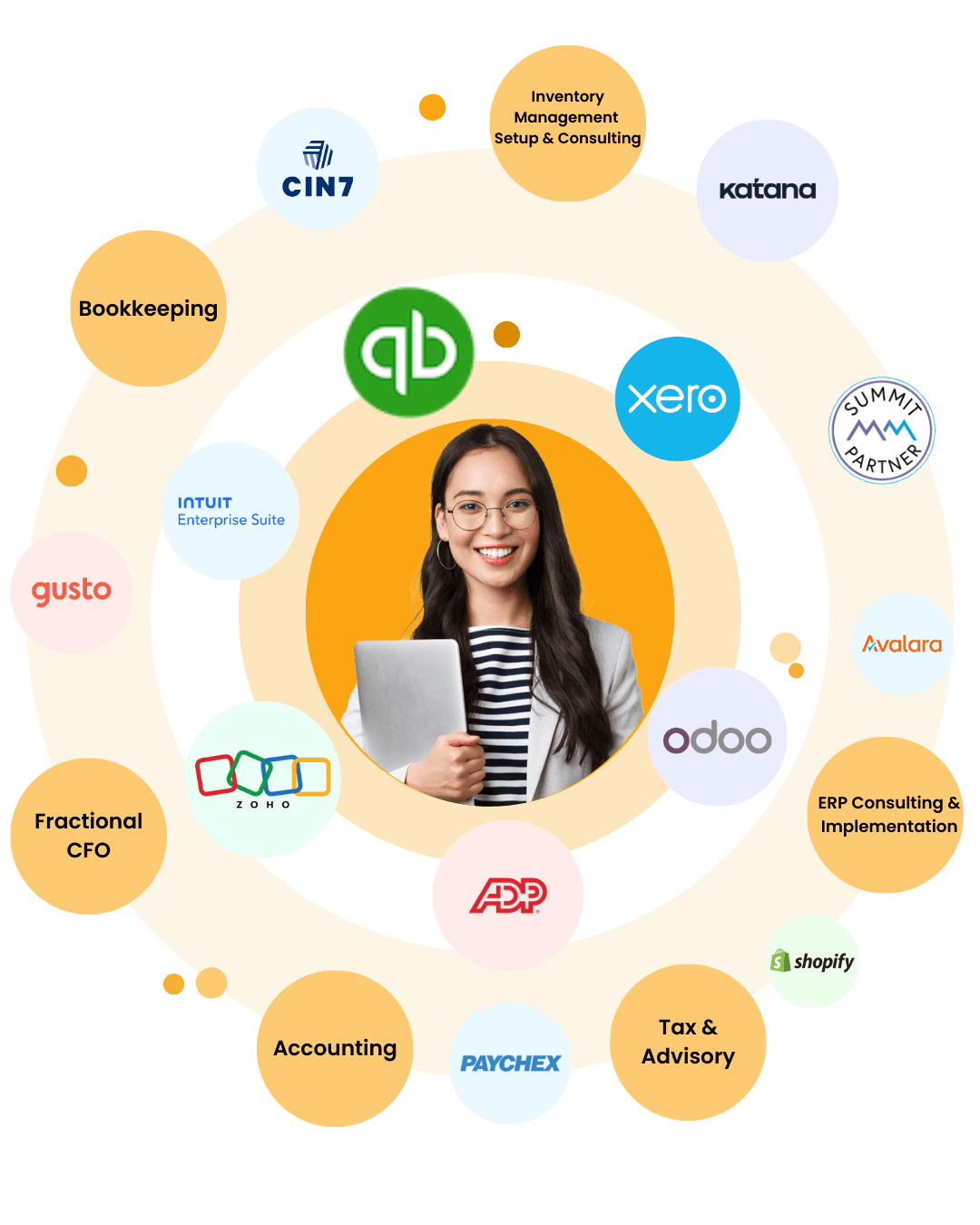
If you already know which platform you want and just need to purchase it, we can help with that too — and depending on the vendor, we may be able to get you a better price, an extended free trial, or a discount that isn't available going direct. As a certified partner across QuickBooks, Odoo, Cin7, Xero, Zoho, Katana, and more, we have access to partner pricing and promotional offers most businesses never see when they go straight to the vendor.
Vendor-Agnostic
What ERP Platforms We Implement
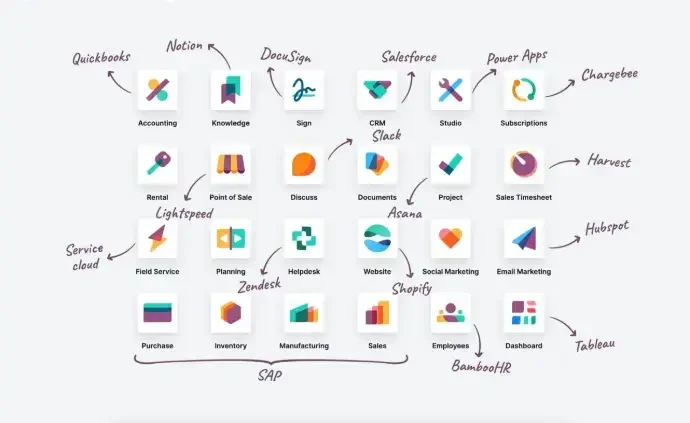
We hold certifications across the following platforms and recommend among them based on what is actually right for your business.
Odoo ERP — An open-source, modular ERP that covers manufacturing, inventory, accounting, CRM, e-commerce, and more in a single system. Best for businesses that need a true all-in-one platform and are ready to move away from disconnected tools. Particularly strong for manufacturers, distributors, and businesses with complex multi-department workflows. Certum is a certified Odoo Ready Partner. Odoo →
Intuit Enterprise Suite (IES) — Intuit's cloud-based multi-entity platform built for businesses outgrowing QuickBooks Online. Supports consolidated reporting across entities, advanced permissions, and a familiar Intuit interface. Best for professional services, multi-location, and multi-entity businesses that want QuickBooks-adjacent accounting with more capability. Certum is a certified IES implementation partner. IES →
QuickBooks Enterprise — The most advanced version of the QuickBooks ecosystem, with robust inventory management, job costing, advanced reporting, and user capacity beyond what QuickBooks Online supports. Best for construction, manufacturing, and distribution businesses that need advanced QuickBooks capabilities without a full ERP investment. Certum is a certified QuickBooks Enterprise Implementation Partner. QuickBooks Enterprise →
Zoho One — A comprehensive cloud-based business operating system that unifies CRM, accounting, inventory, HR, project management, help desk, marketing, analytics, and more under a single login and ecosystem. Best for growing small to mid-sized businesses that want to replace disconnected SaaS tools with an affordable, integrated platform while maintaining flexibility and scalability. Particularly strong for service-based businesses, sales-driven organizations, and companies seeking operational visibility without the complexity or cost of a traditional ERP. Certum provides Zoho consulting, implementation, automation, and integration services tailored to each business’s workflows and growth goals. Certum is a certified Zoho One implementation partner. Zoho One →
Cin7 Core & Omni — A cloud inventory management platform that integrates with QuickBooks Online or Xero to function as an operational ERP layer for product-based businesses. Best for e-commerce and multi-channel retailers, wholesalers, and light manufacturers who need inventory control, order management, and multi-channel sync without a full ERP. Certum is a certified Cin7 implementation partner. Cin7 →
Katana MRP — A manufacturing resource planning tool that connects production, inventory, and accounting for small and mid-sized manufacturers. Best for businesses that build, assemble, or configure products and need bill-of-materials management, production scheduling, and real-time material tracking connected to their accounting platform. Certum is a certified Katana implementation partner. Katana MRP →
Who This Is For: ERP Readiness Signals
Signs You're Ready for ERP Implementation
You do not need a massive budget or a dedicated IT team to move to ERP. What you do need is a clear signal that your current system is holding your business back. Here are the most common signals we see:
- ✓ You are managing operations across multiple disconnected tools — and reconciling them manually every week
- ✓ Your bookkeeper spends significant time moving data between systems that should connect automatically
- ✓ You have inventory, and it does not reconcile accurately with your accounting software
- ✓ You operate across multiple entities, locations, or legal structures and cannot produce a consolidated view without spreadsheet work
- ✓ Month-end close takes more than 5–7 business days and requires significant manual intervention
- ✓ You have outgrown QuickBooks Online or Desktop — hit user limits, inventory limits, or reporting walls
- ✓ Your management team needs real-time data your current software cannot produce
- ✓ A prior consultant or internal team set up a system that never quite worked
If 4 or more of these apply, you are likely a strong ERP candidate. A free discovery call is the fastest way to understand what the right next step looks like for your specific situation.
Is This You?
Does any of this sound familiar?
You're reconciling systems manually every week — and your team is the integration layer.
Your operations run across three or four disconnected tools — inventory in one place, orders in another, accounting somewhere else. Month-end close means someone manually pulling it all together, and you're not confident the numbers are right when they finally land.
A consultant set up your ERP — then disappeared before your team knew how to use it.
You paid for an implementation that went live on paper but never in practice. The system is running, but nobody trusts the data, half the workflows were never configured, and the consultant stopped responding after go-live. You need someone to come in, assess what's salvageable, and finish the job.
Your QuickBooks file hit its ceiling — and the workarounds are becoming the job.
You've hit user limits, inventory constraints, or multi-entity walls that QuickBooks wasn't built for. Your team is maintaining spreadsheets alongside the accounting system because the system can't do what the business needs. You know it's time to move — you just need someone to tell you what to move to, and how to do it without breaking six months of financial history.
If any of these describe your situation, a free 30-minute discovery call is the fastest way to understand what the right next step looks like. Book your call →
Multi-Entity and Multi-Location Accounting
Multi-Entity and Multi-Location ERP Implementation
If your business operates across multiple legal entities, subsidiaries, or locations, standard accounting software creates fragmentation — separate books, manual consolidations, and no unified view of performance without significant monthly effort.
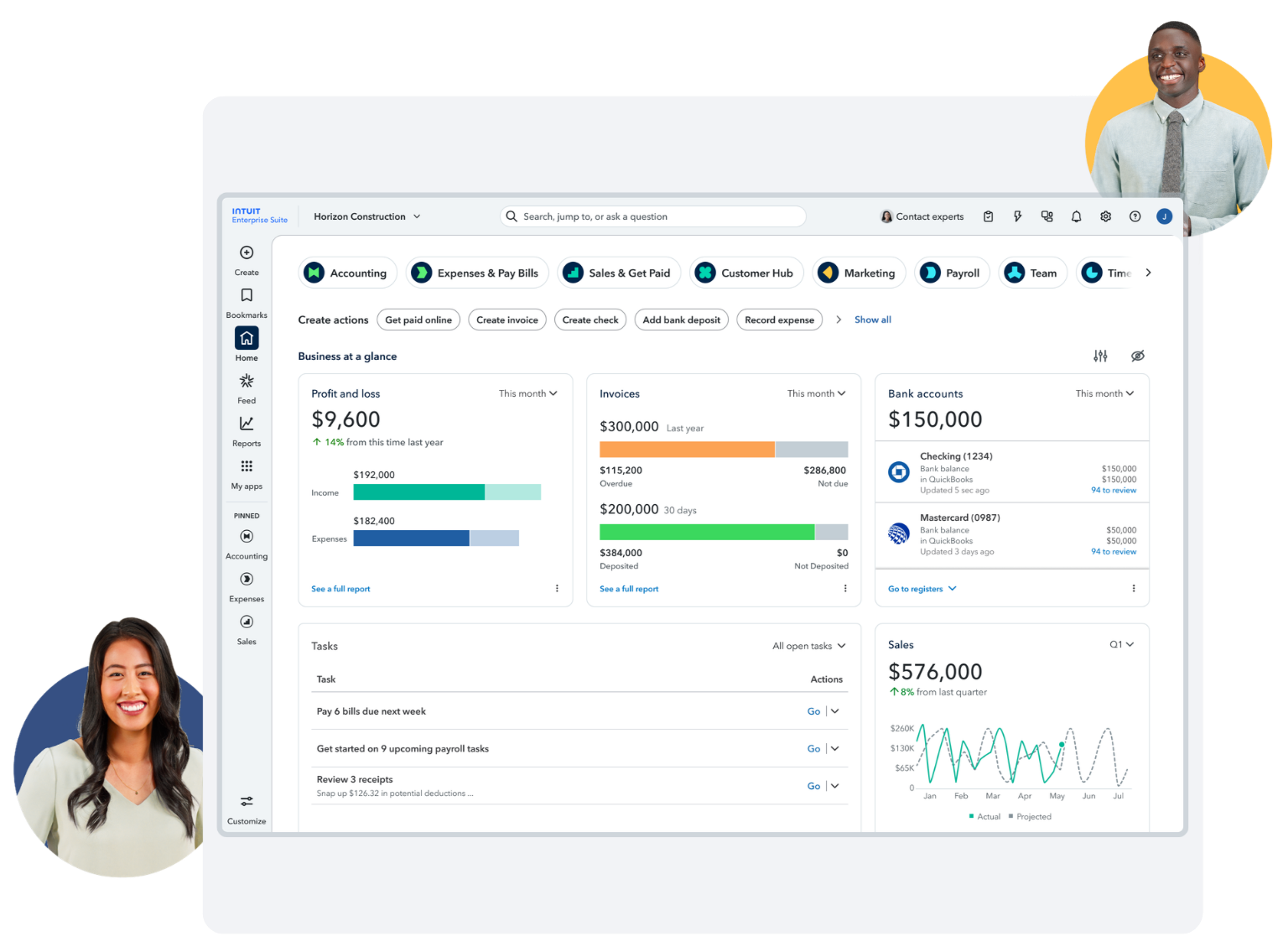
ERP platforms built for this structure, specifically Intuit Enterprise Suite and Odoo ERP, handle multi-entity accounting natively: intercompany transactions, consolidated reporting, entity-level P&Ls, and shared chart of accounts structures.
We configure multi-entity environments so leadership can see the full consolidated picture in real time — without waiting for someone to manually compile it at month-end. This is one of the most common implementations we deliver for holding companies, businesses that have grown through acquisition, and companies with distinct operating units that need to report both separately and together.
Common multi-entity scenarios we implement:
Parent company with 2–5 operating subsidiaries on a shared chart of accounts
Businesses acquired post-rollup needing chart of accounts standardization across entities
Multi-location service businesses needing location-level P&Ls without separate QuickBooks files
Companies with intercompany transactions needing elimination entries automated rather than manual
Recommended platforms: Intuit Enterprise Suite (IES) for multi-entity structures under $30M revenue; Odoo ERP for manufacturing or distribution groups needing operational data consolidated with financials.
Migration Callout: Moving From QuickBooks
Migrating From QuickBooks to ERP or IES
QuickBooks Desktop and QuickBooks Online are excellent tools — until your business outgrows them. If you are running into user limits, inventory constraints, multi-entity complexity, or reporting gaps, the next step is a migration to a platform built for your current size and complexity.
We specialize in migrations that include process redesign, not just data transfer. We audit your current file before migration begins, identify data quality issues and legacy errors, rebuild your chart of accounts for the new environment, and configure workflows so you do not carry bad habits into the new system.
Migration paths we handle:
- → QuickBooks Desktop → Intuit Enterprise Suite (IES)
- → QuickBooks Online → IES
- → QuickBooks Desktop → Odoo ERP
- → QuickBooks Desktop → QuickBooks Online (with workflow redesign)
- → Any legacy accounting system → Odoo, IES, Xero, or Zoho
We preserve your historical data and ensure year-over-year reporting continuity after cutover. Migrations include a parallel testing phase so your team can validate the new system before the old one is decommissioned.
ERP Rescue & Recovery Services
ERP Rescue & Recovery: When a Prior Implementation Didn't Work
ERP implementations fail more often than vendors admit. The business goes live on a system that was misconfigured, a consultant disappears after go-live, integrations break under real transaction volume, or the team was never properly trained and never adopted the new workflows.
Why ERP Implementations Fail — And What It Costs
The data on ERP implementation failures is stark; and rarely discussed by the firms selling the software.
According to a widely cited study by Gartner, approximately 75% of ERP projects are considered failures by the companies that commissioned them — meaning they came in over budget, over schedule, or failed to deliver the expected business outcomes. A separate analysis by Panorama Consulting's 2024 ERP Report found that 52% of ERP implementations exceeded their original budget, and 61% took longer than originally planned. The most common reasons for failure, according to Panorama's research:
Inadequate data migration planning (cited in 43% of failed projects)
Insufficient end-user training and adoption
Scope creep after go-live — the system was configured for how the business ran, not how it actually runs
Consultants who completed go-live and disengaged before the team was operationally stable
At Certum Solutions, ERP rescue and recovery work is one of the most consistent reasons businesses come to us, often after a national firm or offshore consultant completed a go-live that left the books in worse shape than before. We have rebuilt chart-of-accounts structures, re-migrated corrupted data sets, and retrained teams on systems that were never properly configured after deployment. If your ERP implementation did not go as planned, you are not alone— and the situation is fixable.


We recover these situations regularly, it is one of the most common reasons businesses come to Certum Solutions outside of a fresh implementation.
What the original implementation was supposed to accomplish and how far it fell short
What is salvageable in the current configuration and what needs to be rebuilt from scratch
Whether the chosen platform is still the right fit for the business, or whether a different system is a better match
Where the data errors, reconciliation gaps, or broken integrations originated — and what it would take to resolve them
A realistic remediation plan with timeline and fixed scope — not an open-ended hourly engagement
If a prior consultant left your ERP in worse shape than they found it, we will give you an honest assessment of what it would take to fix it. In some cases that means remediation. In some cases it means starting over on a better-suited platform. We will tell you which, and why, before you commit to anything.
Our Implementation Framework
Our ERP Implementation Process
Our ERP implementation system roadmap follows a structured, proven approach:
Discovery &
Scoping
- We evaluate your current systems, data quality, workflows, and integration requirements
- We identify legacy errors and data cleanup needs before any work begins
- We assess which platform fits your business — not which one we prefer
System Selection &
Design
- We recommend the right platform for your industry, revenue stage, and operational complexity
- We design your chart of accounts, workflows, and department-level structure from the ground up
- We configure user roles, permissions, and approval hierarchies
Data Migration &
Implementation
- We extract, clean, map, and import your chart of accounts, vendor and customer records, open balances, and transaction history
- We run a parallel testing phase so your team validates the new system before go-live
- We preserve historical reporting so year-over-year comparisons remain intact after cutover
Training &
Enablement
- Role-specific live training sessions delivered inside your configured environment
- Train-the-trainer sessions for internal team leads who will support ongoing adoption
- Written SOPs and process documentation delivered for each core workflow
- First month-end close completed alongside your team with active Certum support
Ongoing Support &
Advisory
- Ongoing bookkeeping, senior accountant oversight, and monthly close support available post-launch
- Fractional CFO and controller services for businesses that need strategic financial leadership
- Consultation time blocks for system questions, workflow refinements, and integration support
- Software-specific monthly support plans available for Cin7 and other platforms
Typical ERP Timeline
Most ERP implementations range from 8–20 weeks, depending on system complexity, data volume, and integrations. We provide clear timelines and milestones before work begins. ERP success depends on planning, execution, and adoption; not shortcuts.
Industry Fits
Which ERP Fits Your Industry?
We work across five main industries for businesses in North Carolina and across the U.S. to match our platform recommendation to your operational reality — not a predetermined shortlist. Here is how some of the platforms align with the industries we serve.
| Industry | Recommended Platform | Why |
|---|---|---|
| Manufacturing & distribution | Odoo ERP or QuickBooks Enterprise | Bill of materials, production orders, inventory valuation, multi-warehouse, COGS automation. See how we handle inventory accounting and system integration for product-based businesses. |
| Construction & trades | QuickBooks Enterprise or IES | Job costing, subcontractor management, progress billing, WIP reporting, retainage. Learn more about our construction accounting services. |
| Retail & e-commerce | Cin7 + IES or Xero | Multi-channel inventory, order management, Shopify/Amazon/wholesale reconciliation, COGS by SKU. See our inventory accounting and integration services. |
| Professional services | IES or Odoo | Project billing, time tracking, multi-entity structures, department-level P&L. Businesses needing strategic financial leadership alongside their ERP can add fractional CFO and controller services post-go-live. |
| Nonprofits | IES, QB for Nonprofit, or Xero | Fund accounting, grant tracking, donor reporting, Form 990 preparation. Explore our dedicated nonprofit accounting and ERP services. |
Not sure which platform fits your industry and revenue stage? Our discovery call is specifically designed to answer that question.
How to Choose the Right ERP Platform for Your Business
Not every ERP is the right fit for every business. The right platform depends on your industry, your operational complexity, how you manage inventory, and whether you operate across multiple entities or locations. The table below compares the platforms we implement most frequently — based on what we see working in real businesses, not vendor marketing materials. If you're unsure which direction makes sense, our discovery call is specifically designed to answer that question.
| Odoo ERP | Intuit Enterprise Suite | QuickBooks Enterprise | Cin7 | Zoho One | Katana MRP | |
|---|---|---|---|---|---|---|
| Best for | Manufacturing Distribution |
Multi-entity Prof. services |
Construction Job costing |
E-commerce Wholesale |
Service biz Sales-driven |
Light mfg Assembly |
| Revenue range | $2M – $50M+ | $1M – $30M | $1M – $30M | $500K – $20M | $500K – $15M | $500K – $10M |
| Multi-entity | ✓ Native | ✓ Native, consolidated reporting | ~ Separate files, manual consolidation | ✗ | ~ Limited | ✗ |
| Inventory depth | ✓ Multi-warehouse, lot tracking, BOM | ~ Basic inventory | ✓ Advanced inventory, serial/lot | ✓ Best-in-class for product businesses | ~ Module-based | ✓ BOM, production orders |
| Manufacturing / BOM | ✓ Full MRP, work orders | ✗ | ~ Basic assemblies only | ~ Light assembly | ~ Via Zoho Inventory | ✓ Purpose-built for this |
| Job costing | ✓ Project module | ~ Class/project tracking | ✓ Strong — built for construction | ✗ | ~ Via Zoho Projects | ✗ |
| E-commerce / multi-channel | ✓ Native + Shopify/Amazon | ~ Via integrations | ~ Via integrations | ✓ Best-in-class multi-channel | ~ Via Zoho Commerce | ~ Shopify integration |
| Accounting depth | ✓ Full native accounting | ✓ Intuit-native, familiar UI | ✓ Full QuickBooks accounting | ~ Syncs to QBO or Xero | ✓ Zoho Books included | ~ Syncs to QBO or Xero |
| CRM included | ✓ Native Odoo CRM | ✗ | ✗ | ✗ | ✓ Zoho CRM included | ✗ |
| Typical impl. cost* | $15K – $40K | $8K – $20K | $8K – $18K | $6K – $15K | $8K – $20K | $5K – $12K |
| Typical timeline | 10 – 20 weeks | 6 – 12 weeks | 6 – 10 weeks | 4 – 8 weeks | 6 – 10 weeks | 4 – 8 weeks |
| Migration from QB | ✓ | ✓ Natural upgrade path | ✓ From QBO or QBD | ~ Inventory data only | ✓ | ~ Production data only |
| Certum certified | ✓ Odoo Ready Partner | ✓ IES Implementation Partner | ✓ QB Enterprise Partner | ✓ Cin7 Implementation Partner | ✓ Zoho One Partner | ✓ Katana Partner |
✓ = native capability · ~ = available via module or integration · ✗ = not supported · *Implementation cost ranges reflect Certum Solutions professional services fees only — software licensing is billed separately by the vendor. Ranges vary based on data complexity, user count, and number of integrations.
Not sure which platform fits your business? Our discovery call is designed exactly for this conversation — we'll assess your operations, revenue stage, and growth goals and give you a straight recommendation before any proposal is written. Book a free ERP assessment →
How to Choose




Not sure if you actually need ERP — or just a better setup?
That's the most common question we get. And the honest answer is: sometimes you need a full ERP migration, and sometimes you need a chart of accounts rebuild and two integrations. We'll tell you which, and why, before any proposal is written. Book a Free ERP Assessment — 30 minutes, no pitch. Prefer to call? (980) 210-6946
We'll review your current systems, identify where the real bottlenecks are, and give you a straight answer on what makes sense next. Fixed proposals only — you'll know the full scope and investment before any work begins.
Most clients get their assessment call scheduled within 48 hours.
Why Choose Certum
Why Growing Businesses Choose Certum Over the Big Firms
Most ERP consultants fall into one of two categories: national advisory firms built for companies above $50M, or freelance consultants who disappear after go-live. Neither is built for a $5M distribution company trying to get real-time inventory visibility without a six-figure implementation budget.
Certum Solutions works specifically in the lower mid-market — businesses between $1M and $30M where the operational complexity is real but the budget for a Dynamics 365 implementation isn't. Here's what that means in practice:
You work with the people doing the work. Not a salesperson who hands you off to a junior team after the contract is signed. The consultant you meet in discovery is the one configuring your system.
We recommend what fits your business, not our certification. We hold partnerships across Odoo, Intuit Enterprise Suite, QuickBooks Enterprise, Cin7, Xero, Zoho, and Katana. We're compensated the same regardless of which platform you choose. That makes our recommendations cleaner than a firm with one dominant partner.
Accounting accuracy is non-negotiable. Most ERP firms are software specialists, not accountants. Every Certum implementation includes a chart of accounts review, data migration audit, and first month-end close completed alongside your team. Your books are clean from day one — not six months later after a reconciliation catch-up.
We don't disappear after go-live. Most implementation clients transition into an ongoing accounting or advisory relationship after launch. The firm that built your system keeps it accurate month to month — no handoff, no knowledge gap.
Rescue work is something we actually do. If a prior consultant left your ERP in worse shape than they found it, we've seen it before. We'll give you an honest assessment of what's salvageable and what needs to be rebuilt — before you commit to anything.

4.7/5.0 average client rating · BBB A+ Accredited · Woman-Owned Business · Clutch Top Financial Consulting Firm — Charlotte, NC 2025Reviews
What Our Clients Say About Working With Certum
Every ERP implementation is different — the platform, the timeline, the data, the team. What stays consistent is how we work: transparent scoping, direct communication, and ongoing support after go-live. Here's what clients across manufacturing, construction, e-commerce, and professional services have said after working with us.
“Robert Williams was the representative assisting my company with our purchase of QuickBooks Enterprise Silver Edition - 10 Users. He has wonderful customer service skills. Each time I called with a different issue or need, he was quick to assess my company"s needs and give a great solution. Thank you Robert, for your assistance.”
— Myrna M.“Highly recommend Certum Solutions for any business needing expert accounting support - especially if Odoo is used. Unlike other firms we scouted—who were often unresponsive or pushed unnecessary services—Certum was professional, transparent, and fairly priced from day one. During our onboarding, they brought in a full team of experts (including Odoo and project management specialists) to ensure our specific needs were met. They make the financial side of the business seamless so we can focus on our operations.”
— Brahim B.“Samuel Johnson has been a huge help for us during out Quickbooks integration. The benefits of having the support has helped us resolve many issues and concerns as we get deeper into the software. We even just signed up for a longer term support deal to help continue the relationship. Thank you Certum and Sam!”
— Josh K.Real Results
ERP Implementations We've Delivered — Real Businesses, Real Results
The most honest answer to "how does your implementation process work" is a project we've already completed. Below are case studies from clients across industries who came to us with disconnected systems, failed prior implementations, or operations that had outgrown their accounting software — and what the outcome looked like after go-live.
Multi-Operation Business · QuickBooks Enterprise
“QuickBooks support was not providing us with the specifics that we needed. They are available for the QB 101 stuff, but we needed to dive deeper into our workflows. Having Sam available to us has been a crucial part of us being able to implement our new QB ERP. We appreciate the transparency and follow-up from Certum Solutions. They guide us without guessing, ensuring accuracy and efficiency every step of the way.”
— Anonymous ClientFree Resources
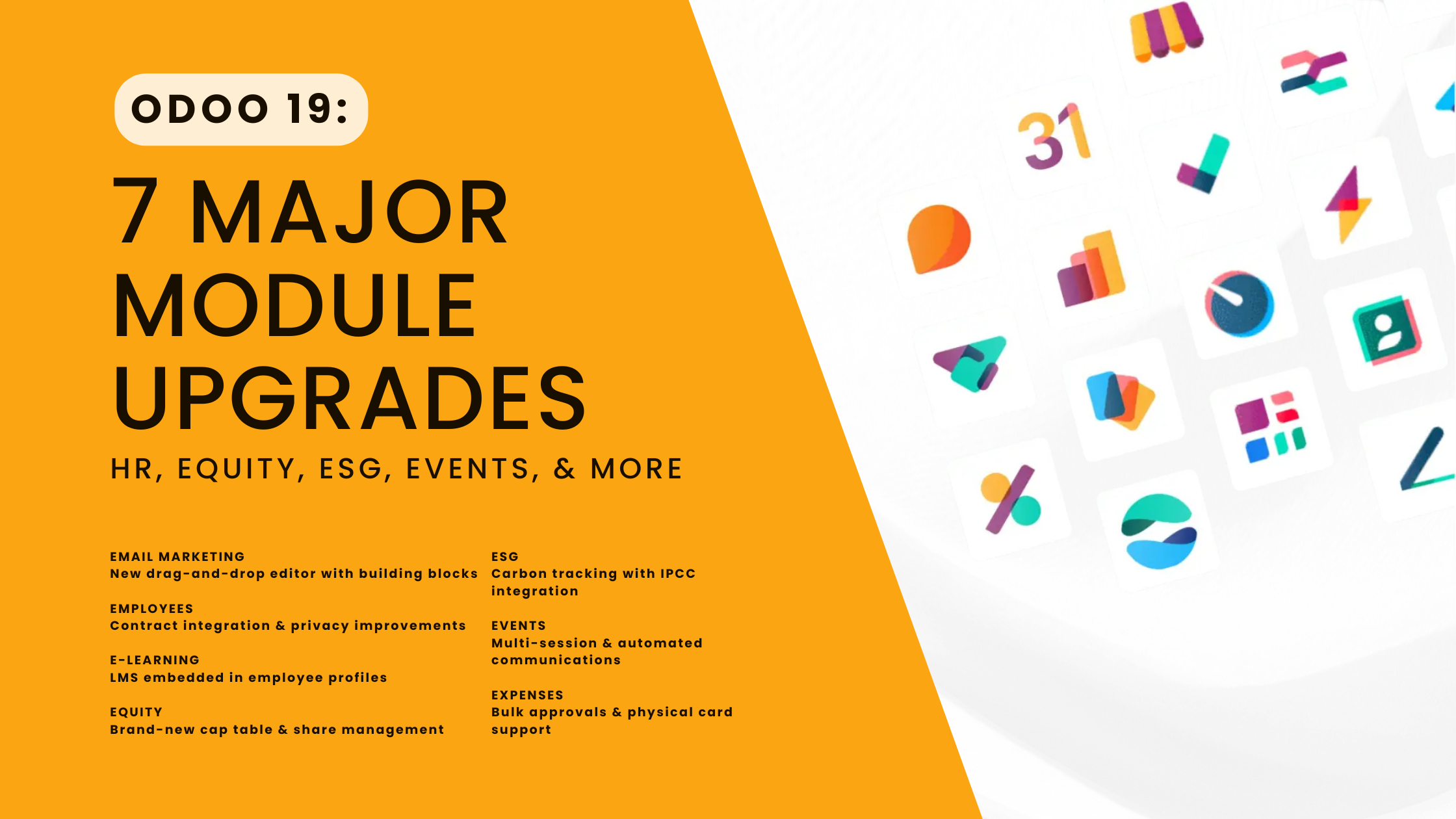
ERP Implementation Guides & Resources
Whether you're evaluating platforms, preparing for a migration, or recovering from a system that didn't go as planned — these guides are written by our consulting team based on what we see in real implementations every month.
ERP Implementation Frequently Asked Questions
-
ERP implementation is the process of selecting, configuring, and deploying an enterprise resource planning system to manage your core business operations — accounting, inventory, purchasing, fulfillment, and reporting — in a single unified platform. At Certum, implementation includes data migration, workflow setup, integration with your existing tools, user training, and post-go-live support. We manage the full process so your team is not doing it alone.
-
Most implementations for small to mid-size businesses take 6 to 16 weeks, depending on the platform, complexity of your operations, number of integrations, and the condition of your existing data. QuickBooks migrations to IES typically run 6–10 weeks. Odoo implementations for manufacturing or distribution clients range from 10–20 weeks. We provide a project timeline estimate during the paid discovery phase so you know what to expect before work begins.
-
Most of our implementations fall between $8,000 and $40,000 in professional services fees, depending on the platform, data complexity, user count, and integrations required. Software licensing is billed separately by the vendor. We provide a fixed-scope proposal after discovery — you know the full investment before any work begins. See the cost section above for specific ranges by engagement type.
-
We implement Intuit Enterprise Suite (IES), Odoo ERP, QuickBooks Desktop, QuickBooks Online, QuickBooks Enterprise, Xero, Zoho One, Cin7 (Core and Omni), Katana MRP, and more. We are vendor-neutral — we recommend the platform that fits your business, not the one that pays the highest referral margin.
-
Yes. Data migration is included in every implementation engagement. We handle extraction, mapping, cleaning, and import of your chart of accounts, vendor and customer records, historical transactions, open balances, and inventory data. We also preserve historical reporting so year-over-year comparisons remain intact after you cut over to the new system.
-
We do not disappear after launch. Every implementation includes a post-go-live support period with your project team. Most clients transition into an ongoing accounting or advisory relationship with Certum after go-live. We also offer formal Cin7 monthly support, consultation time blocks for ongoing questions, and ongoing bookkeeping services across all transaction volume tiers.
-
RSM and Eide Bailly are top-20 national CPA and advisory firms. Their ERP practices are built for mid-market to enterprise clients — typically businesses above $30M in revenue — and center on platforms like Microsoft Dynamics 365, Oracle NetSuite, and Sage Intacct. Implementations at that scale can run six figures in professional fees before the software license is factored in, and you are generally working with a large team where the people in the sales meeting are not the people doing the work. Certum Solutions is a boutique firm purpose-built for the lower mid-market: businesses between $1M and $30M that have real operational complexity but do not need, or cannot afford, a national firm's overhead. We implement Odoo, Intuit Enterprise Suite, QuickBooks Enterprise, Cin7, and Katana. You work directly with the consultants doing the work, every time. And because we are not locked into one platform's ecosystem, we recommend what is actually right for your business — not what our largest vendor certification points to.
-
Yes. Rescue and recovery work is a significant part of our ERP practice. If your current ERP was misconfigured, abandoned by a prior consultant, or is simply being underused, we can audit your setup, rebuild the chart of accounts and workflows, retrain your team, and get you to a functional state. We have cleaned up failed implementations from large national firms, internal IT deployments, and rushed self-implementations.
-
Many businesses don’t need ERP immediately. An ERP consultant evaluates whether optimization, integrations, or a phased ERP approach is the right next step. Schedule a consultation with our ERP implementation experts.
-
Choosing the right ERP starts with understanding your businesses workflows, reporting needs, and growth plans; not software features. Different ERPs serve different business models, industries, and levels of complexity.
A platform-agnostic ERP consultant compares systems based on how well they align with your operations, not other incentives. That’s why our clients choose us, Certum Solutions, your unbiased ERP system consultant of choice.
-
Certum provides vendor-agnostic ERP advisory tailored to mid-market operational businesses.
-
Your business is likely ready for ERP when your current accounting or operations software is creating more work than it saves. The clearest signals: you're managing inventory, orders, or financials across multiple disconnected tools; month-end close takes more than 5–7 business days; you've hit user limits or reporting walls in QuickBooks; or your team is maintaining spreadsheets to fill gaps your software can't handle. If 3 or more of those apply, a discovery call will tell you whether ERP is the right next step or whether a better-configured version of your current system gets you there first.
-
Accounting software — QuickBooks, Xero, and similar platforms — manages your financial transactions: invoices, expenses, payroll, and reporting. ERP (Enterprise Resource Planning) connects your accounting to the rest of your operations: inventory, purchasing, manufacturing, order fulfillment, project management, and more — in a single system. The difference matters when your operations have grown past what accounting software was designed to track. If your bookkeeper is manually reconciling data from three systems every month, that's the accounting software doing the work it wasn't built for. ERP eliminates the gap between what's happening in your business and what's reflected in your books.
-
Yes — with the right planning. Every Certum ERP implementation includes a parallel testing phase where your team validates the new system before the old one is decommissioned. We run both systems simultaneously for a defined window, so your operations continue uninterrupted and your team has time to gain confidence in the new platform before go-live. The biggest source of disruption in ERP implementations isn't the software switch — it's poor data preparation and inadequate training. Our discovery process identifies data quality issues and configures training around your actual workflows before any cutover happens.
-
Your historical data migrates with you. Every Certum implementation includes a full data migration: chart of accounts, vendor and customer records, open balances, transaction history, and inventory data are extracted, cleaned, mapped, and imported into the new system. We preserve year-over-year reporting so comparisons remain intact after cutover — you don't lose your financial history. Before migration begins, we audit your current QuickBooks file for data quality issues, legacy errors, and reconciliation gaps. Those get resolved before import, not discovered after go-live. If you've been on QuickBooks Desktop or Online for years, this is the cleanup opportunity most clients didn't know they needed.
Let's figure out the right path forward — together.
You don't need another vendor telling you their software is the answer. You need someone who's seen what happens when the wrong system gets deployed, knows what clean books actually look like after go-live, and will tell you the truth before you spend anything.
That's the conversation we're built for.
Or call us directly: (980) 210-6946 Average response time: same business day